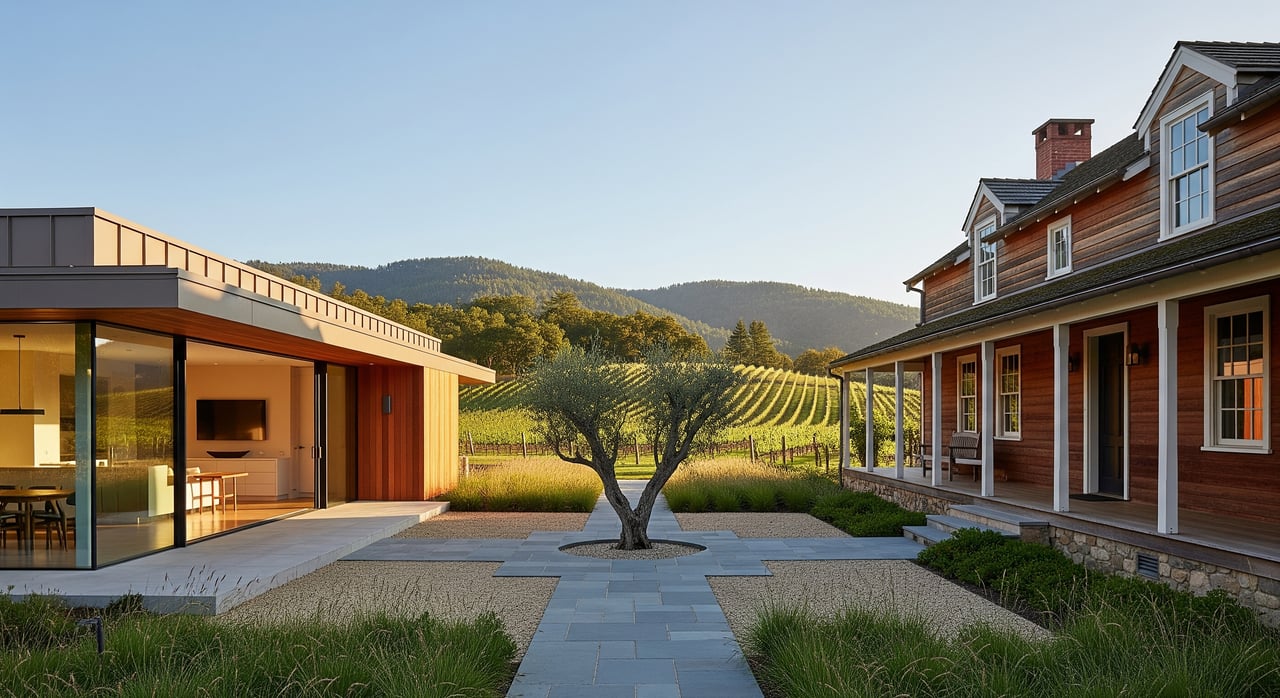
Torn between a brand-new build and a vintage charmer in Healdsburg? It’s a real choice here, where walkable downtown streets meet rural vineyard lanes and energy codes, wildfire risk, and HOAs can shape your day-to-day costs. You want a home that fits your lifestyle and your budget without surprises. This guide breaks down the tradeoffs that matter in Healdsburg so you can move forward with clarity. Let’s dive in.
How Healdsburg’s layout shapes your choice
Healdsburg centers on the Plaza with historic neighborhoods nearby, plus newer infill homes and subdivisions just beyond the core. Rural properties sit in Alexander Valley and Dry Creek Valley with acreage, vineyards, and agricultural zoning. Local realities influence your decision: regional wildfire risk and an evolving insurance market, California’s energy rules for new construction, and historic-design review near downtown. Local utility programs and incentives can also affect operating costs.
Maintenance and repair outlook
New and vintage homes age differently. Understanding the first 5 to 10 years of ownership helps you set the right budget and expectations.
New construction: lower near-term upkeep
- Builders typically offer workmanship and structural warranties, and new systems carry factory warranties.
- Near-term maintenance is often light compared to older homes. You’ll still handle landscape care and routine servicing for HVAC or heat pumps.
- Expect some early punch-list items and quality differences by builder. Check what landscaping and irrigation are delivered at close.
Vintage homes: more variability and hidden issues
- Older roofs, HVAC, plumbing, electrical panels, and windows may be at or near end of life.
- Hidden defects are more common. Plan for a full home inspection plus specialty inspections for roof, electrical, foundation, sewer, or septic.
- Historic materials can be costly to restore. Deferred maintenance can affect your budget and timeline for move-in or resale.
Smart move: Review seller disclosures, confirm permit history with the city or county, and get quotes for major items before you remove contingencies.
Energy, electrification, and monthly costs
Energy use adds up over years. In California, new builds often start far ahead due to state standards.
New construction: built for efficiency
- New homes must meet California’s Building Energy Efficiency Standards (Title 24), which push stronger insulation, high-performance windows, and efficient lighting.
- Many new homes include solar and EV readiness and use high-efficiency HVAC, often heat pumps.
- Operating costs are typically lower in the first decade, and some projects qualify for local or utility incentives.
Vintage homes: upgrade potential with planning
- Older windows, less insulation, and aging HVAC often mean higher bills at first.
- Upgrades like insulation, window replacements, solar, and heat pump conversions are very doable. Some projects may require an electrical panel upgrade.
- Local programs can help with electrification incentives. Check what is current before you budget.
Tip: Appraisals do not always reflect long-term savings from energy upgrades. Weigh utility savings alongside comfort and resilience.
Lot size, outdoor use, and zoning
Your yard and outdoor living options vary widely by location in Healdsburg.
In-town and historic neighborhoods
- Lots near the Plaza are smaller, often 0.1 to 0.25 acre or less, with mature landscaping and patios.
- Exterior changes on historic properties may require design review and permits.
- Small-lot charm brings walkability, but additions or ADUs can be more complex to approve.
New subdivisions and infill builds
- Many infill homes use compact but efficient layouts and outdoor rooms. Some newer areas offer slightly larger lots.
- Some developments place roads, drainage, and landscape under an HOA, which adds a monthly fee but reduces your personal maintenance.
Rural and vineyard properties
- Parcels range from a few acres to 40-plus acres with agricultural zoning. Septic and well systems are common and require ongoing care.
- Private roads, defensible space, and agricultural use add unique maintenance and permitting considerations.
- Confirm whether a property falls within city sewer boundaries or relies on septic to plan inspections and costs.
Character and lifestyle fit
Choosing between “character” and “convenience” helps narrow your search.
- Vintage homes near downtown deliver charm, period details, and a strong sense of place. You often gain walkability and mature trees, with the tradeoff of more upkeep and possible historic-review steps for exterior changes.
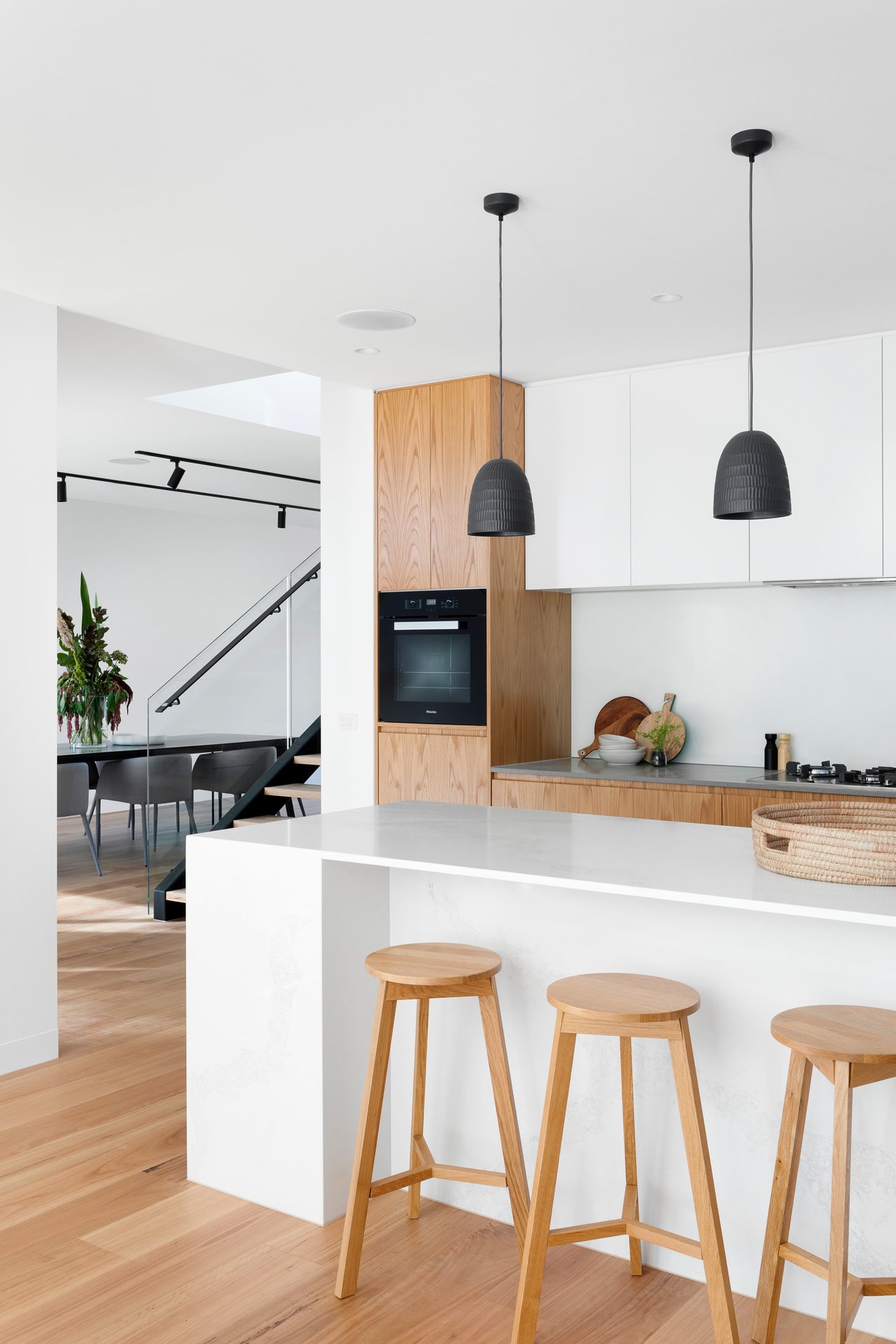
- New construction prioritizes modern layouts, higher ceilings, larger kitchens, and energy performance. It’s typically more turnkey with fewer near-term projects, though the yard may be smaller close to the core.
Financing, insurance, and HOA or tax details
These behind-the-scenes items can shape your monthly costs and timeline.
Financing
- New construction can involve builder-coordinated construction-to-permanent loans and draw schedules. Underwriting focuses on the finished home.
- Existing vintage homes usually fit conventional financing. If the condition is poor, your lender may require repairs, and certain loans may not allow significant deficiencies.
- Appraisals rely on comparable sales. Unique new builds or rare vintage homes may require appraisers with strong local knowledge.
Insurance and wildfire risk
- Sonoma County’s wildfire exposure affects insurance availability and price. Non-renewals and higher premiums have been reported across the state.
- Features like ember-resistant vents, non-combustible siding, and defensible space can help, especially in newer builds. Insurers still assess location and overall exposure.
- Obtain insurance quotes early, as they can influence your final budget and loan approval.
HOA fees and special taxes
- Newer subdivisions often have HOAs that maintain roads, landscaping, and amenities. Budget for monthly dues.
- Some developments use special assessments, such as Mello-Roos, which increase annual property taxes.
- Many vintage neighborhoods have no HOA, though exceptions exist.
Healdsburg home profiles: which one fits?
These local archetypes can help you picture your fit. They are examples, not listings.
Downtown historic cottage (vintage)
- Early 1900s Craftsman or Victorian details on a small lot within walking distance of the Plaza.
- Pros: character, mature landscaping, proximity to shops and tasting rooms.
- Cons: potential immediate roof or systems work, older windows, limited parking, and possible design review for changes.
Westside or Eastside family home (mid-century vintage)
- 1950s to 1980s single-family homes on medium lots with neighborhood feel.
- Pros: larger yards than downtown and potential for an accessory dwelling unit, subject to permits.
- Cons: variable energy efficiency and likely system upgrades.
New infill home or contemporary build
- Efficient lots near downtown or within newer pockets, built to current code.
- Pros: energy-efficient envelope, modern floor plan, solar and EV readiness, and warranties.
- Cons: smaller yard near the core, higher price per square foot, and possible HOA.
Suburban new subdivision home
- Newer developments on medium lots with sidewalks and community features.
- Pros: new systems, larger lots in some areas, community maintenance.
- Cons: HOA fees, potential special assessments, and younger landscaping.
Rural or vineyard property
- Acreage in Alexander Valley, Dry Creek Valley, or outside city limits.
- Pros: privacy, views, agricultural potential, space for outbuildings.
- Cons: septic and well maintenance, private road costs, insurance considerations, and different financing requirements.
Budgeting and timeline tips
- Plan a repair reserve. For a relatively sound vintage home, set aside 1 to 5 percent of the purchase price for near-term fixes. Increase if inspections reveal major issues.
- Get insurance quotes for the exact address early. Wildfire exposure can change both price and availability.
- Request and review documents: seller disclosures, full home inspection, pest report, title report, HOA documents, and final permits.
- For new builds, confirm the builder warranty, certificate of occupancy, and whether solar or EV equipment is owned or leased.
- For rural or vintage homes off sewer, order septic and well inspections and confirm county records.
- Map out energy upgrades. If you plan to electrify, check current incentives and whether panel upgrades are needed.
Decision guide: new vs. vintage
Choose new construction if you want:
- Lower near-term maintenance and modern energy performance.
- Contemporary layout, higher ceilings, and EV readiness.
- Predictable warranties and potentially lower operating costs.
Choose a vintage home if you want:
- Architectural character, mature trees, and proximity to the Plaza.
- Larger lots in some neighborhoods and the potential to renovate to your taste.
- A project-friendly path where upgrades can build equity over time.
Your next step
Every property tells a story here, from historic cottages to sleek new builds and vineyard retreats. If you want a clear plan and a calm, education-first process, you’ll appreciate a local guide who knows the inspections to order, the incentives to check, and the builders and contractors to call. Ready to compare specific homes and budget your path with confidence? Connect with Apryl Lopez for tailored guidance, local market insight, and a concierge experience from search to close.
FAQs
What makes new Healdsburg homes more efficient?
- New builds must meet California’s Title 24 energy standards, so they typically include better insulation, efficient windows, and often solar and EV readiness.
How should I budget for repairs on an older home in Healdsburg?
- Set aside 1 to 5 percent of the purchase price for near-term fixes, adjusting higher if inspections reveal major roof, HVAC, plumbing, electrical, or foundation needs.
How does wildfire risk affect home insurance here?
- Insurers consider local exposure and may set higher premiums or deductibles; hardened features and defensible space can help but do not guarantee lower rates.
Are there special taxes or fees in newer subdivisions?
- Some newer communities have HOA dues and may include special assessments such as Mello-Roos that increase annual property taxes.
Do financing and appraisals differ for new vs. vintage homes?
- Yes. New builds may involve construction-to-permanent loans and unique comps, while older homes in poor condition can trigger lender-required repairs.